SNP advantage
To:Brew Readers
Healthcare Brew // Morning Brew // Update
As Medicare Advantage becomes less appealing to payers, they’re eyeing special needs plans.
Advertisement Advertisement

We’re so back—not just this newsletter, but also the Moderna flu vaccine, which went from canceled to under review again in just a week. It’s been a rocky road these past few years for mRNA development, but by Aug. 5, we should all have a lot more clarity over where its future stands.

In today’s edition:

SNPs are so hot right now

Merck and Mayo partner up

Making Rounds with Nvidia

—Caroline Catherman, Patrick Kulp, Cassie McGrath

MEDICARE ADVANTAGE

Close up of a healthcare cross in a transparent box with "low cost" and "buy now!" stickers.

Illustration: Anna Kim, Photo: Adobe Stock

It might seem like health insurance companies’ top priority lately is to shrink Medicare Advantage (MA) member numbers, but that’s not the full story.

UnitedHealthcare, Elevance, and CVS’s Aetna all expect lower MA enrollment for 2026 after upping plan prices, reducing benefits, and pulling business out of some areas in response to sky-high medical costs and shrinking margins. Other major payers like Cigna have left MA altogether. (Though Humana unexpectedly grew its MA footprint.)

But even as companies shrink MA as a whole, they’re still going all-in on one particular type: the special needs plan (SNP), which is meant for sicker patients who need extra coverage and benefits.

SNPs accounted for 21% of all MA enrollees and half of the total growth in MA from 2024 to 2025, per a September KFF report. The majority of SNP enrollees—more than 4 out of 5—are in dual-eligible SNPs (D-SNPs), a plan for people eligible for both Medicare and Medicaid.

Are SNPs the new insurer fave?—CC

Presented By Comcast Business

PHARMA

Merck building

Merck

Two health industry institutions whose collaborations date back to the 1940s are teaming up on a project for a new era.

Merck and Mayo Clinic announced an agreement today that will allow the drug giant to tap the health system’s genomic and clinical data for AI and advanced analytics in drug discovery and development. The orgs claim the partnership marks Mayo’s first deal of this scale with a pharma company.

The partnership hinges on the Mayo Clinic Platform, which offers data from the US hospital and its international partners, like lab results, medical imaging, clinical notes, and molecular data.

“[Mayo has] a really unique wealth of de-identified clinical, molecular multimodal data sets, and these are not readily available in the healthcare landscape, at least in a really clean and highly curated way,” Greg Hersch, Merck’s SVP of enterprise strategy and venture, told Healthcare Brew.

Here’s what the partnership entails.—PK

TECH

A portrait of Kimberly Powell, vice president of healthcare at NVIDIA

Nvidia

Each week, we schedule our rounds with Healthcare Brew readers. Want to be featured in an upcoming edition? Click here to introduce yourself.

About 25 years ago, when Kimberly Powell was studying electrical engineering at Northeastern University, she took an internship with a medical imaging company that was working to build more technology into radiology.

She worked closely with radiologists and saw their work change when updated imaging equipment provided closer looks into patients’ medical issues. The problem was the company was building its own graphics cards, a computer system that processes image data (and is the major backbone of AI).

So she called up tech company Nvidia to ask to use its technology because around that time Nvidia was moving from computer graphics into accelerated computing, which requires specialized software to compute.

“They said, ‘We have early evidence that healthcare is going to be a great user of this technology, but we don’t know how,’” Powell said. Then they asked her: “Would you like to join the company and help us figure that out?”

Powell, now VP of healthcare with Nvidia, sat down with Healthcare Brew at the JPM Healthcare Conference in San Francisco on Jan. 13 to share what the company has accomplished in the healthcare industry over the last 17 years and where she thinks innovation is moving.

See the full conversation here.—CM

Together With Vanderbilt

VITAL SIGNS

A laptop tracking vital signs is placed on rolling medical equipment.

Francis Scialabba

Today’s top healthcare reads.

Stat: 7. That’s how many healthcare professionals made the Bloomberg Billionaires Index, representing the 500 wealthiest people in the world. (Becker’s Hospital Review)

Quote: “That’s not a lot of money.”—Keith Mueller, director of the Rural Policy Research Institute, on how Nevada’s new public health insurance option won’t cover the loss of ACA subsidies (KFF Health News)

Read: Why this longtime FDA scientist left the agency. (the Wall Street Journal)

Take care: A majority of surveyed healthcare leaders count on AI to streamline their day-to-day, utilizing AI-assisted clinical and operational workflows. Read more in Comcast Business’ Healthcare Tech Trends Report for 2026 and Beyond.*

*A message from our sponsor.

SHARE THE BREW

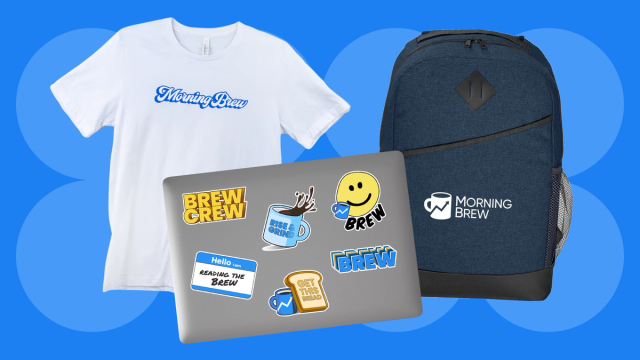
Share Healthcare Brew with your coworkers, acquire free Brew swag, and then make new friends as a result of your fresh Brew swag.

We're saying we'll give you free stuff and more friends if you share a link. One link.

Your referral count: 5

Click to Share

Or copy & paste your referral link to others:
https://www.healthcare-brew.com/r?kid=9ec4d467

         
ADVERTISE // CAREERS // SHOP // FAQ

Update your email preferences or unsubscribe here.
View our privacy policy here.

Copyright © 2026 Morning Brew Inc. All rights reserved.
22 W 19th St, 4th Floor, New York, NY 10011

Navigate the healthcare industry

Healthcare Brew covers pharmaceutical developments, health startups, the latest tech, and how it impacts hospitals and providers to keep administrators and providers informed.

By subscribing, you accept our Terms & Privacy Policy.

A mobile phone scrolling a newsletter issue of Healthcare Brew