Happy Monday! Hospitals are increasingly relying on international healthcare workers to deal with staffing shortages, but even for those employees, going through the US visa process is almost as arduous as the trek to Mordor (you know, lots of orcs, fiery landscapes, suspicious creatures...). Are you an international healthcare professional in the US? Tell us about your experience!
In today’s edition:
 Rare diseases Rare diseases
 Faulty testing Faulty testing
 First-time settlement First-time settlement
—Maia Anderson, Quinn Sental, Katie Hicks
|
|
Amelia Kinsinger
What’s the hottest trend in drug development? Rare diseases.
Drugmakers historically shied away from developing drugs to treat rare diseases because the patient populations were so small that drugmakers didn’t think they’d make any money. But in recent years, the number of FDA-approved rare disease treatments has skyrocketed thanks to the Orphan Drug Act, which incentivizes drugmakers to invest in research and development for these drugs.
“Before the Orphan Drug Act was passed, there were less than 40 therapies approved for rare diseases,” Karin Hoelzer, director of policy and regulatory affairs at the National Organization for Rare Disorders, or NORD, told Healthcare Brew. “Now, half of the new approvals that are occurring every year are for rare diseases, and there have been more than 1,100 approved indications for rare diseases.”
Keep reading here.—MA
Do you work in healthcare or have information about the industry that we should know? Email Maia at [email protected]. For confidential conversations, ask Maia for her number on Signal.
|
|
PRESENTED BY SIEMENS HEALTHINEERS
|
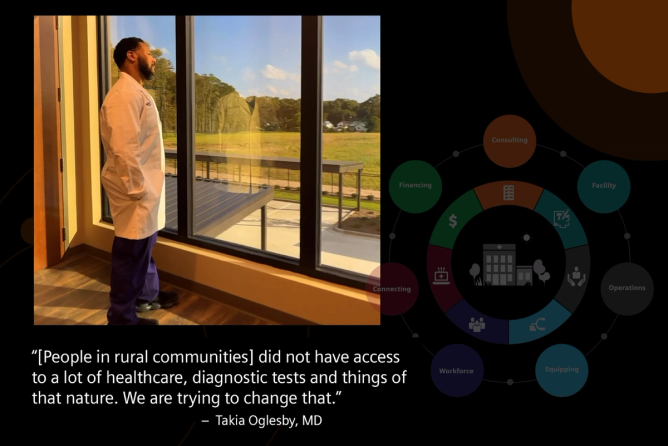
In a new case study, Siemens Healthineers follows one doctor’s efforts to expand healthcare access to underserved patients in Georgia.
Dr. Takia Oglesby’s strategy led him to establish his practice with multiple locations and a multi-specialty focus to meet the growing demand for medical care in his community. This in turn helped position his biz for sustainable growth.
Siemens Healthineers sat down with Dr. Oglesby to discuss expanding services, staffing with intention, and negotiating reimbursements. Learn how he worked with Siemens Healthineers to bring his vision to value.
|
|
Andreswd/Getty Images
The most commonly ordered test for breast cancer patients may lead doctors down the wrong path when it comes to chemotherapy recommendations for Black patients, a January study from the University of Illinois Chicago (UIC) found.
The test, known as the 21-gene recurrence score assay, identifies aggressive tumors in patients with estrogen receptor-positive breast cancer and assigns a recurrence score (RS) to the cancer’s aggression level. A lower RS represents a lower risk of breast cancer returning after hormone treatment—meaning the benefits of chemotherapy are unlikely to be greater than the side effects—and vice versa for a higher score.
The cutoff range for RS is different depending on if patients are over or under the age of 50, but it stays the same regardless of the ethnicity or race of the patient. However, according to the study, there are “significant racial differences in the association between chemotherapy treatment and breast cancer death.”
Keep reading here.—QS
Do you work in healthcare or have information about the industry that we should know? Email Quinn at [email protected]. For confidential conversations, ask Quinn for their number on Signal.
|
|
New York Attorney General Tish James. Michael M. Santiago/Getty Images
For the first time, an ad agency has agreed to a settlement over its role in the opioid crisis.
Publicis Health, a branch of the advertising holding company Publicis Groupe, has agreed to pay $350 million to settle claims brought by attorneys general from around the country that it engaged in “predatory and deceptive marketing strategies” while working for Purdue Pharma to promote the prescription of opioids including OxyContin, Butrans, and Hysingla, according to a statement released by New York Attorney General Letitia James’s office.
The AG’s office alleged that Publicis Health “was responsible for creating advertisements and materials…that promoted OxyContin as safe and unable to be abused” in campaigns that it developed with Purdue between 2010 and 2019.
Keep reading at Marketing Brew.—KH, QS
|
|
TOGETHER WITH LETSGETCHECKED
|
|
Matters of the  . Gain valuable insights into your heart health with cholesterol testing from LetsGetChecked—which now screens for Lipoprotein(a), a genetic biomarker. High Lp(a) affects ~20% of the population, and it increases your risk of heart attack and stroke. Know your levels + enjoy at-home convenience and clinical support. Save 25% with code HEALTHCARE2024. . Gain valuable insights into your heart health with cholesterol testing from LetsGetChecked—which now screens for Lipoprotein(a), a genetic biomarker. High Lp(a) affects ~20% of the population, and it increases your risk of heart attack and stroke. Know your levels + enjoy at-home convenience and clinical support. Save 25% with code HEALTHCARE2024.
|
|
Level up your career with these resources from our sponsors!
|
|
Francis Scialabba
Today’s top healthcare reads.
Stat: More than 120 individuals with high-level AI jobs joined career site Glassdoor in 2023, up from 19 people in 2022. Healthcare is one of the industries in which chief AI officer roles are popping up. (the New York Times)
Quote: “If and when this medicine is approved, it will offer a new option for patients who need pain relief but who do not want to take an opioid.”—David Altshuler, chief scientific officer of Vertex Pharmaceuticals, on the company’s non-opioid painkiller that may be the first of its kind to receive FDA approval (the Wall Street Journal)
Read: Parents remember their stillborn babies. (ProPublica)
A case for care: This case study follows one doctor’s journey to building a multi-specialty group of outpatient centers. See how he meets demand for medical care while positioning his business for growth.*
*A message from our sponsor.
|
|
ADVERTISE
//
CAREERS
//
SHOP
//
FAQ
Update your email preferences or unsubscribe
here.
View our privacy policy
here.
Copyright ©
2024
Morning Brew. All rights reserved.
22 W 19th St, 4th Floor, New York, NY 10011
|
|







 healthcare mission