TGIF! Today is World Family Doctor Day—and the US needs more family doctors. By 2026, 21% of family medicine and other primary care physicians will have reached retirement age, while demand for primary care is expected to grow 4%. We hope all the family doctors take time to relax from their busy schedules and enjoy the springtime blooms—those April showers brought lots of May flowers.
In today’s edition:
 AI health spend AI health spend
🩸 Blood guidance
 Making Rounds Making Rounds
—Maia Anderson, Kristine White
|
|
Just_super/Getty Images
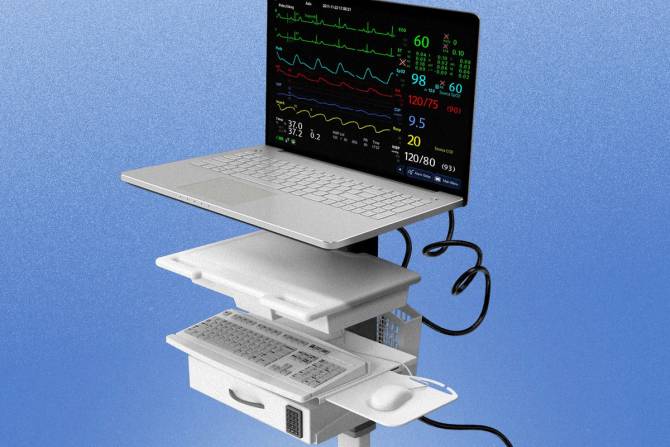
It seems every day we hear a new prediction on how artificial intelligence (AI) is going to change the future, from eliminating millions of jobs to making contact with aliens. Many predictions are based on types of AI technology that don’t actually exist yet. But a recent study found that AI technology that does exist has the potential to save the US healthcare industry up to $360 billion per year, or 10% of annual healthcare spending.
The study, from Harvard University and consulting firm McKinsey, estimated that those cost savings are attainable within the next five years “and would not sacrifice quality or access.”
“Everything we are talking about here…are technologies that already exist today and are used in case studies that we have seen in our experience,” Nikhil Sahni, a partner at McKinsey and lead author of the study, told Healthcare Brew. “We’re not talking about fancy new use cases that no one has ever seen implemented.”
While the study laid out a number of administrative use cases—such as using AI to optimize staffing levels for patient demand, or to optimize an operating room’s schedule so more surgeries can be performed—the main cost-saving uses of AI are for clinical tasks, according to the study. These include using AI to predict readmissions and to interpret medical images and scans.
“The administrative spending in total for a payer, for example, is 15% to 20% of the operating expenses. The medical side is more like 80% to 85%,” he said. “So in the end, the bigger savings will come from the medical side use cases for both payers and providers.”
But scaling AI to the point that healthcare would see such huge cost savings remains a challenge, Sahni said.
Keep reading here.—MA
Do you work in healthcare or have information about the industry that we should know? Email Maia at [email protected]. For completely confidential conversations, ask Maia for her number on Signal.
|
|
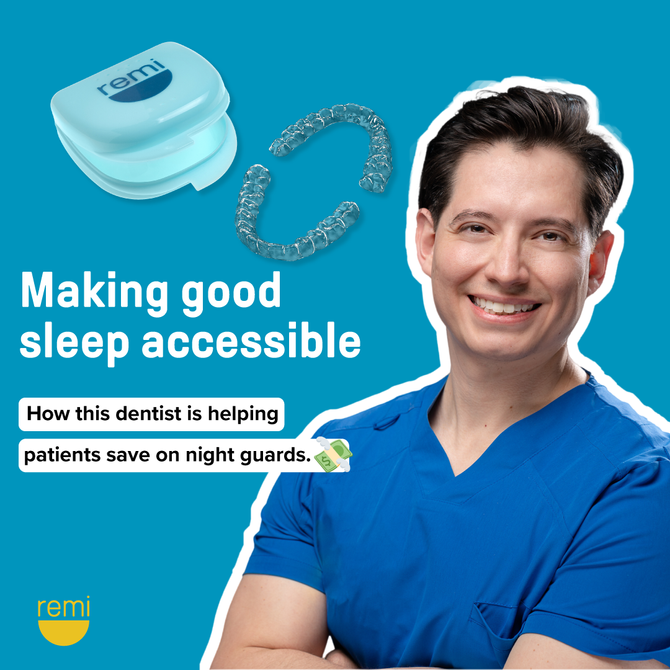
We haven’t figured out a way to unplug from life’s stresses when we hit the hay—yet. We just deal with ’em in a different way. Bruxism, aka grinding or clenching your teeth while you sleep, can cause major damage to your smile, your sleep, and your well-being.
But dentists have spoken: Remi’s night guards strike the balance between cost effective and teeth protective. Instead of settling for a $500+ night guard from a dental office, Remi offers custom guards at 80% less than what dentists charge.
Each night guard is made in Remi’s own lab by a highly skilled team of dental pros. And with their at-home kit, you can get your perfect fit without needing to take a trip to the dentist.
Protect your smile with Remi. Get your custom guard with a 45-Night Perfect Fit Guarantee.
|
|
Will Varner
The reversal of a 40-year-old AIDS-era blood donation rule might improve the nation’s waning blood supply.
The FDA announced last week that it eliminated restrictions that had previously prevented many gay and bisexual men from donating blood, which have largely been criticized as discriminatory. Rather than an outright ban, the FDA will ask every blood donor a series of “individual risk-based questions to reduce the risk of transfusion-transmitted HIV,” the agency announced.
“The implementation of individualized donor assessment protocols will lead to a more inclusive and diverse donor pool, an expansion of the nation’s blood supply, and more opportunities to save lives and improve health,” Debra BenAvram, CEO of the Association for the Advancement of Blood and Biotherapies (AABB), a nonprofit that accredits blood centers, said in a statement.
Under previous guidance, men who had sex with other men in the past three months could not donate blood. Eliminating that three-month time deferral could increase the country’s blood supply by 2%–4%, according to a 2014 study from the Williams Institute, a research center at the UCLA School of Law focused on LGBTQ+ policies.
For most of 2023, the country’s supply of Type O blood—the most common blood type—has been below optimal levels, according to data from America’s Blood Centers, The American Red Cross, and Blood Centers of America compiled by the AABB.
An influx of donations may not happen right away, however, as blood centers take time to update their software with the new screening questionnaire and train frontline staff to comply with the FDA’s guidance.
“We anticipate being ready to begin accepting donors under the new policy in the coming months. In the meantime, the current three-month restriction for men who have sex with men will remain in effect,” nonprofit blood center OneBlood spokesperson Susan Forbes said in a statement.
Keep reading here.—KW
Do you work in healthcare or have information about the industry that we should know? Email Kristine at [email protected]. For completely confidential conversations, ask Kristine for her number on Signal.
|
|
On Fridays, we schedule our rounds with Healthcare Brew readers. Want to be featured in an upcoming edition? Click here to introduce yourself.
This week’s Making Rounds spotlights Megan Reichert, a clinical informatics nurse at San Francisco-based Dignity Health. Reichert spoke about what it means to work in clinical informatics, the type of technology she trains providers to use, and the biggest misconception about her job.
This interview has been lightly edited for length and clarity.
How would you describe your job to someone who doesn’t work in healthcare?
I enable nurses and doctors to document the care they provide and help them learn to use new technology. My position is a little bit unique because I not only train physicians how to use the electronic health record (EHR), but I also work with physicians and pharmacists to update order sets.
What’s an order set?
It’s basically a list of evidence-based interventions, and doctors can pick and choose which ones they do and don’t want. It’s like a checklist. Order sets need to be updated periodically to reflect the newest research, so it can be difficult for large health systems to keep their order sets up to date, which means that providers are using out-of-date orders—not great for patient safety or patient care.
Besides EHRs, what other types of technology do you train providers to use?
Once in a while there may be a new app. We rolled out TigerConnect, which is kind of like WhatsApp for healthcare, so we helped end users download it on their phone. We also recently implemented iPads at the bedside so nurses could take pictures of wounds and upload them to the healthcare record. We had to teach them how to use the app and the iPad in order to make that happen.
Keep reading here.—MA
|
|
Francis Scialabba
Today’s top healthcare reads.
Stat: Ninety-three percent of abortions are performed during the first trimester, according to the CDC. (Politico)
Quote: “You’ve got to come with information, or it’s too easy for them to say, ‘No, goodbye.’”—Carrie Boswell, a patient who convinced her insurer to cover Wegovy, a GLP-1 drug prescribed off label for weight loss (the Wall Street Journal)
Read: The issue of parental notification and consent for young patients seeking abortion has split Democratic lawmakers. (Politico)
|
|
-
Experts suggest people struggling to help older, stubborn patients (or parents) should appeal to their sense of pride.
-
More hospitals are hiring police officers to aid worker safety, but it’s unclear if their presence is helping.
-
Healthcare company Hippocratic AI raised $50 million in seed funding from venture capital firms General Catalyst and Andreessen Horowitz, which will boost its large language machine learning model.
-
WHO issued guidance this week discouraging consumers from using artificial sweeteners, citing health concerns.
|
|
Catch up on the top Healthcare Brew stories you may have missed:
|
|
|
Written by
Maia Anderson and Kristine White
Was this email forwarded to you? Sign up
here.
{if !contains(profile.lists,"Marketing Brew") || !contains(profile.lists,"CFO Brew") || !contains(profile.lists,"HR Brew") || !contains(profile.lists,"EmTech Brew") || !contains(profile.lists,"IT Brew") || !contains(profile.lists,"Retail Brew") || !contains(profile.lists,"Healthcare Brew")}
Take The Brew to work
{/if}
{if !contains(profile.lists,"Marketing Brew")}
-
Marketers:
{if !contains(profile.lists,"Marketing Brew")}
Marketing Brew
{/if}
{/if}
{if !contains(profile.lists,"CFO Brew") || !contains(profile.lists,"HR Brew")}
-
Corporate:
{if !contains(profile.lists,"CFO Brew")}
CFO Brew
{/if}
{if !contains(profile.lists,"HR Brew")}
HR Brew
{/if}
{/if}
{if !contains(profile.lists,"EmTech Brew") || !contains(profile.lists,"IT Brew")}
-
Tech:
{if !contains(profile.lists,"IT Brew")}
IT Brew
{/if}
{if !contains(profile.lists,"EmTech Brew")}
Tech Brew
{/if}
{/if}
{if !contains(profile.lists,"Retail Brew")}
-
Retailers:
Retail Brew
{/if}
{if !contains(profile.lists,"Healthcare Brew")}
-
Healthcare:
Healthcare Brew
{/if}
{if !contains(profile.lists,"Daily Business") || !contains(profile.lists,"Money Scoop") || !contains(profile.lists,"Money With Katie")}
Get smarter in just 5 minutes
{/if}
{if !contains(profile.lists,"Daily Business")}
-
Business News:
Morning Brew
{/if}
{if !contains(profile.lists,"Money Scoop") || !contains(profile.lists,"Money With Katie") || !contains(profile.lists,"Raise")}
-
Money & Career:
{if !contains(profile.lists,"Money Scoop")}
Money Scoop
{/if}
{if !contains(profile.lists,"Money With Katie")}
Money With Katie
{/if}
{if !contains(profile.lists,"Raise")}
Raise
{/if}
{/if}
Business education without the BS
Interested in podcasts?
|
ADVERTISE
//
CAREERS
//
SHOP
//
FAQ
Update your email preferences or unsubscribe
here.
View our privacy policy
here.
Copyright ©
2023
Morning Brew. All rights reserved.
22 W 19th St, 4th Floor, New York, NY 10011
|
|