In the shadows
To:Brew Readers
Healthcare Brew // Morning Brew // Update
“Shadow AI,” the ungoverned use of AI tools prone to privacy issues, is a big headache for healthcare.

Earlier this week, President Trump made his State of the Union address. Though it resulted in no new policy, here’s how healthcare factored in:

  • TrumpRx got a nod after its delayed rollout, and the president urged Congress to codify the “most favored nation” drug pricing policy.
  • ACA subsidies still aren’t being extended, as he instead encouraged HSAs.
  • Tariffs are back on the table, despite the Supreme Court’s opposing opinion.
  • He reiterated his stance against gender-affirming care for minors.

In today’s edition:

Shadow AI is lurking

Reforming PBMs

What’s in a reopening?

—Patrick Kulp, Maia Anderson, Cassie McGrath

AI

A robot in doctor's white coat and stethoscope holding a clipboard

phonlamaiphoto/Adobe Stock

At a time when tech companies want to make AI tools as standard-issue as stethoscopes, the technology is seemingly everywhere in the healthcare industry. But some of its use still remains in the shadows, so to speak—ungoverned by workplaces and rife with security and patient safety risks, experts said.

This so-called “shadow AI” remains problematic, according to a recent survey from professional software provider Wolters Kluwer: Nearly a fifth (17%) of more than 500 healthcare workers admitted to tapping unauthorized AI in the workplace. And two in five said they’d encountered such a tool but didn’t use it.

Alex Tyrrell, SVP and CTO of Wolters Kluwer’s health division, told us healthcare workers aren’t necessarily breaking the rules intentionally; they may not have a clear idea of what tools are allowed or how tech companies use data inputted into AI systems for training purposes.

“As these tools become more ubiquitous, as we become familiar with them and use them in our daily lives, there’s the potential to kind of blur the line when you’re in a workplace setting, particularly in a regulated environment,” Tyrrell told Morning Brew.

Read more on this risky AI use here.—PK

Presented By The Crew

PBMS

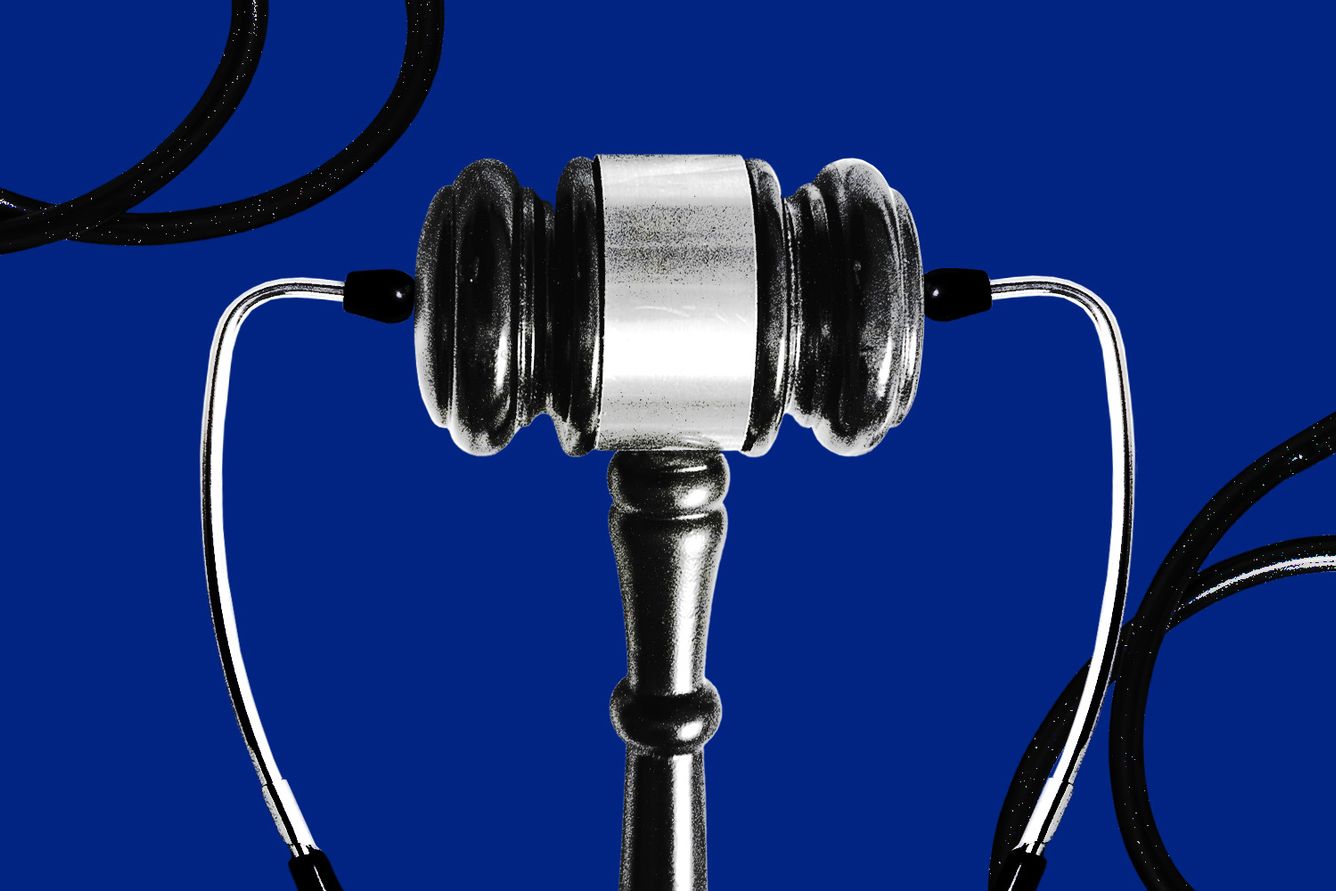
Close up of a gavel wearing a stethoscope.

Illustration: Anna Kim, Photos: Adobe Stock

After years of failed attempts, Congress has passed the first significant set of reforms for PBMs.

The new rules were included in a government funding bill signed into law on Feb. 3, ending a partial government shutdown and funding most government agencies through September.

Starting in 2028, PBMs must meet new requirements including passing through 100% of the rebates they get from drugmakers on to insurers and sending biannual reports to insurers with data on a range of things from the net prices they pay for drugs to how much they reimburse pharmacies.

The reforms were “a long time coming,” according to Dima Qato, a senior fellow at the University of Southern California (USC) Schaeffer Center for Health Policy and Economics. “It’s a start to improve transparency, but I think we need to ensure that [they’re] enforced.”

Catch up on all the latest PBM drama here.—MA

HOSPITALS

A sketch rendering of new New York Medical Center in Irving, NY

New York Medical Center

It’s no secret that rural hospitals are struggling. With over 700 hospitals at risk of closing, 77% of rural counties considered care deserts, and looming cuts to Medicaid, you rarely hear of facilities reopening after a closure.

A group in upstate New York is trying to change this course, however, as it works to reopen TLC-Lakeshore Hospital in Irving and turn it into a New York Medical Center facility for behavioral health and substance use disorder treatment.

“If the hospital closes, usually it just stays closed and it doesn’t get to be repurposed,” Ray Manning, CEO of New York Medical Center, which is also referred to as NE Med, told us. “But we have that unique option right now, being able to open it as a behavioral health facility.”

Investing in Irving. Before shuttering in 2020 after a 2019 $7.1 million deficit following a Chapter 11 bankruptcy and subsequent reorganization from 2013–2017, 45-bed TLC-Lakeshore was the only hospital in the area that offered behavioral health and substance use disorder specialty treatment.

What goes into reopening a rural facility.—CM

Together With Vanderbilt

VITAL SIGNS

A laptop tracking vital signs is placed on rolling medical equipment.

Francis Scialabba

Today’s top healthcare reads.

Stat: 21%. That’s the portion of US teens and kids with obesity, a record high, per new CDC data from August 2021–2023. (ABC)

Quote: “We got to do some real things real differently, unless you like being number 50 all the time.”—Jennifer Avegno, the New Orleans health director, on Louisiana’s efforts to lower the state’s high maternal and infant mortality rates through postpartum house calls (KFF Health News)

Read: Hawaii and California Kaiser Permanente workers have ended their monthlong strike. (Healthcare Dive)

The feeling of getting a 5/5 on the Brew’s weekly news quiz has been compared to getting a company-wide shoutout from your boss. It’s that satisfying.

Ace the quiz

SHARE THE BREW

Share the Brew

Share the Brew, watch your referral count climb, and unlock brag-worthy swag.

Your friends get smarter. You get rewarded. Win-win.

Your referral count: 5

Click to Share

Or copy & paste your referral link to others:
healthcare-brew.com/r/?kid=9ec4d467

         
ADVERTISE // CAREERS // SHOP // FAQ

Update your email preferences or unsubscribe here.
View our privacy policy here.

Copyright © 2026 Morning Brew Inc. All rights reserved.
22 W 19th St, 4th Floor, New York, NY 10011

Navigate the healthcare industry

Healthcare Brew covers pharmaceutical developments, health startups, the latest tech, and how it impacts hospitals and providers to keep administrators and providers informed.

By subscribing, you accept our Terms & Privacy Policy.

A mobile phone scrolling a newsletter issue of Healthcare Brew