Big Bucks from Big Tech
To:Brew Readers
Healthcare Brew // Morning Brew // Update
Northwestern Medicine’s head of AI and engineering on how she finds funding.

Hi, again! Spain recently held its 80th annual Tomatina festival, where thousands threw tomatoes for the fun of it. And, perhaps unsurprisingly, there’s also a health benefit to that: Nonprofit Mental Health America suggests (safely) throwing or breaking something is one way to help release rage. Meaning now is as good a time as any to raid your fridge for unusable, chuckable veggies.

In today’s edition:

Funding hack

Walgreens’s five-way split

Health cost increase

—Cassie McGrath, Maia Anderson, Courtney Vinopal

AI

Headshot of Northwestern's Adrienne Kline on a small blue cloud with darker blue stars nearby

Northwestern Medicine

As AI tools are rapidly making their way into healthcare, Adrienne Kline is one researcher leading the way in development.

Head of AI and engineering at Illinois-based Northwestern Medicine’s Center for Artificial Intelligence at the Bluhm Cardiovascular Institute, Kline received $1.4 million in research grants in the last year from tech giants Amazon, Microsoft, and Nvidia to develop new AI technologies for both patients and healthcare administrators.

These companies regularly make investments into AI, with Microsoft pledging in January $80 billion to create AI-enabled data centers to train models and deploy AI and cloud-based applications globally.

With this funding, Kline spearheaded the creation of a medical deidentification tool called PixelGuard, which removes identifying data for safe sharing of sensitive health information. The assistant professor at Northwestern also led the creation of a multimodal cardiac platform, Project Corazon, which reads MRI slices to diagnose cardiac abnormalities.

Here’s how she’s used her research grants so far.—CM

Presented By Zelis

RETAIL PHARMACIES

Two customers walking into a Walgreens.

Jonathan Wiggs/Getty Images

Walgreens has completed a deal to be bought by private equity firm Sycamore Partners, and pharmacy experts are worried it’ll bring with it layoffs and pharmacy closures.

Rumors of the takeover began swirling last December, and Walgreens executives confirmed in March they had signed a definitive agreement with Sycamore. As part of the deal, Walgreens and its subsidiaries are to be split into five separate, privately owned companies: retail pharmacy chain Walgreens, pharmaceutical wholesaler the Boots Group, specialty pharmacy company Shields Health Solutions, post-acute care company CareCentrix, and primary care clinic chain VillageMD.

Under Sycamore’s ownership, Walgreens will be led by CEO Mike Motz, who previously worked as CEO of Staples US Retail, a company the private equity firm acquired in 2017. Former Walgreens CEO Tim Wentworth will continue to serve as a director, company execs said in an Aug. 28 press release.

So far, industry experts have expressed worry.—MA

INSURANCE

Dollar wrapped inside a pill bottle.

Douglas Sacha/Getty Images

There’s an old adage that health is wealth, but it can also be costly—particularly for employers that cover health insurance for their workers.

Companies expect healthcare to become even costlier next year, according to a recent survey of 121 employers covering 7.4 million US lives conducted by the Business Group on Health (BGOH).

The firms surveyed expect their costs to rise by a median of 9% next year, up from 8% this year, according to the report. Employers saw their actual costs surpass projected costs in 2023 and 2024 by less than one percentage point.

Weighing obesity treatment. GLP-1 medications were cited as one top culprit contributing to this projection, with 72% of employers reporting the drugs were driving healthcare costs to a “very great” or “great” extent at their organizations, according to the report.

Keep reading on HR Brew.—CV

Together With Pri-Med

VITAL SIGNS

A laptop tracking vital signs is placed on rolling medical equipment.

Francis Scialabba

Today’s top healthcare reads.

Stat: 230,000 and 5,000. That’s how many cases and deaths from cholera there have been across 23 African countries so far this year, with the case count doubling over the last three years. (NPR)

Quote: “In the absence of federal leadership, we will have 50 states doing 50 different things. We saw this during the early stages of Covid as well with states just doing what they hoped was right because of the chaos at the federal level.”—Kyle McGowan, former chief of staff at the CDC during the first Trump administration, on how vaccines are becoming increasingly politicized (the Washington Post)

Read: Five takeaways from the House’s hearing on AI in healthcare. (Stat)

Putting financial health first: Don’t let claim denials hurt your revenue cycle. With claims insights and Zelis’s new feature, revenue leaders can spot denial trends and take control of financial health. Learn more here.*

*A message from our sponsor.

SHARE THE BREW

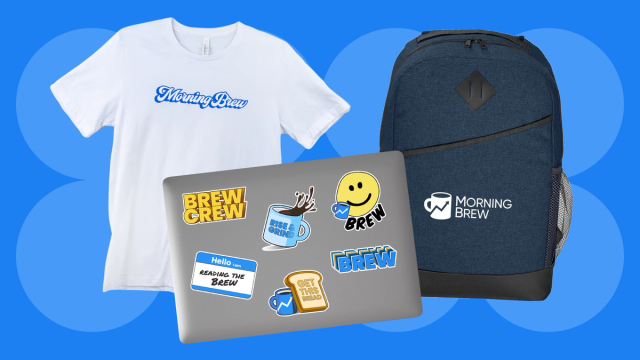
Share Healthcare Brew with your coworkers, acquire free Brew swag, and then make new friends as a result of your fresh Brew swag.

We're saying we'll give you free stuff and more friends if you share a link. One link.

Your referral count: 5

Click to Share

Or copy & paste your referral link to others:
https://www.healthcare-brew.com/r?kid=9ec4d467

         
ADVERTISE // CAREERS // SHOP // FAQ

Update your email preferences or unsubscribe here.
View our privacy policy here.

Copyright © 2025 Morning Brew Inc. All rights reserved.
22 W 19th St, 4th Floor, New York, NY 10011

Navigate the healthcare industry

Healthcare Brew covers pharmaceutical developments, health startups, the latest tech, and how it impacts hospitals and providers to keep administrators and providers informed.

By subscribing, you accept our Terms & Privacy Policy.

A mobile phone scrolling a newsletter issue of Healthcare Brew